
What could it take to turn the evidence on indoor air quality into national action?
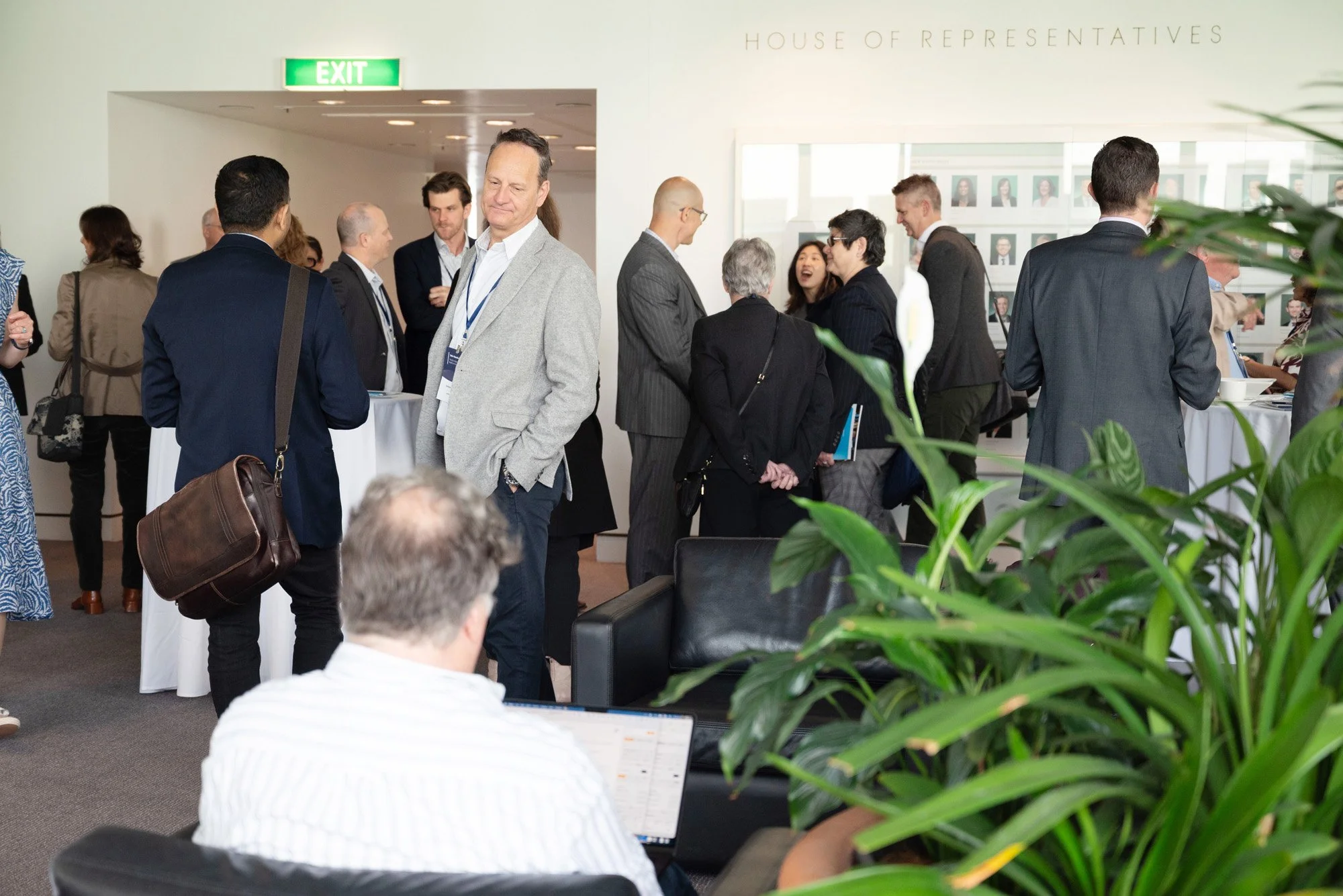
Together with representatives from health, research, government, industry and the community, we discussed the possible ways forward at the Safer shared air 2026 conference at Parliament House in Canberra on Wednesday 28th October, with people also joining from around the world through the livestream.
Hosted by the Safer Air Project, in conjunction with AIRAH, the Centre for Safe Air, and Public Health Action Network, the conference explored indoor air quality as a preventative health strategy, what Australia is doing to improve it, and the steps needed to deliver a National Healthy Air Strategy.
Indoor air quality as a preventative health strategy
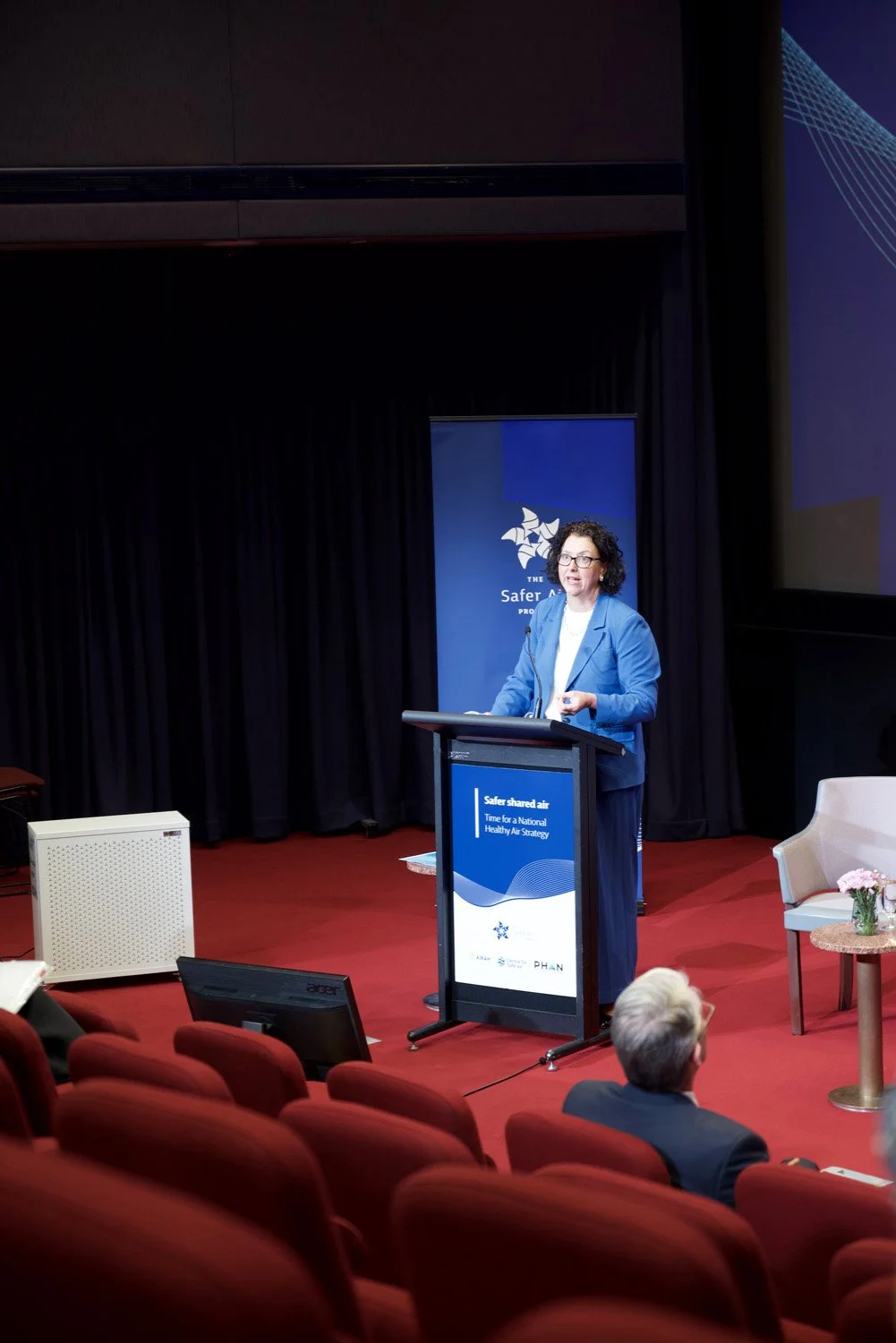
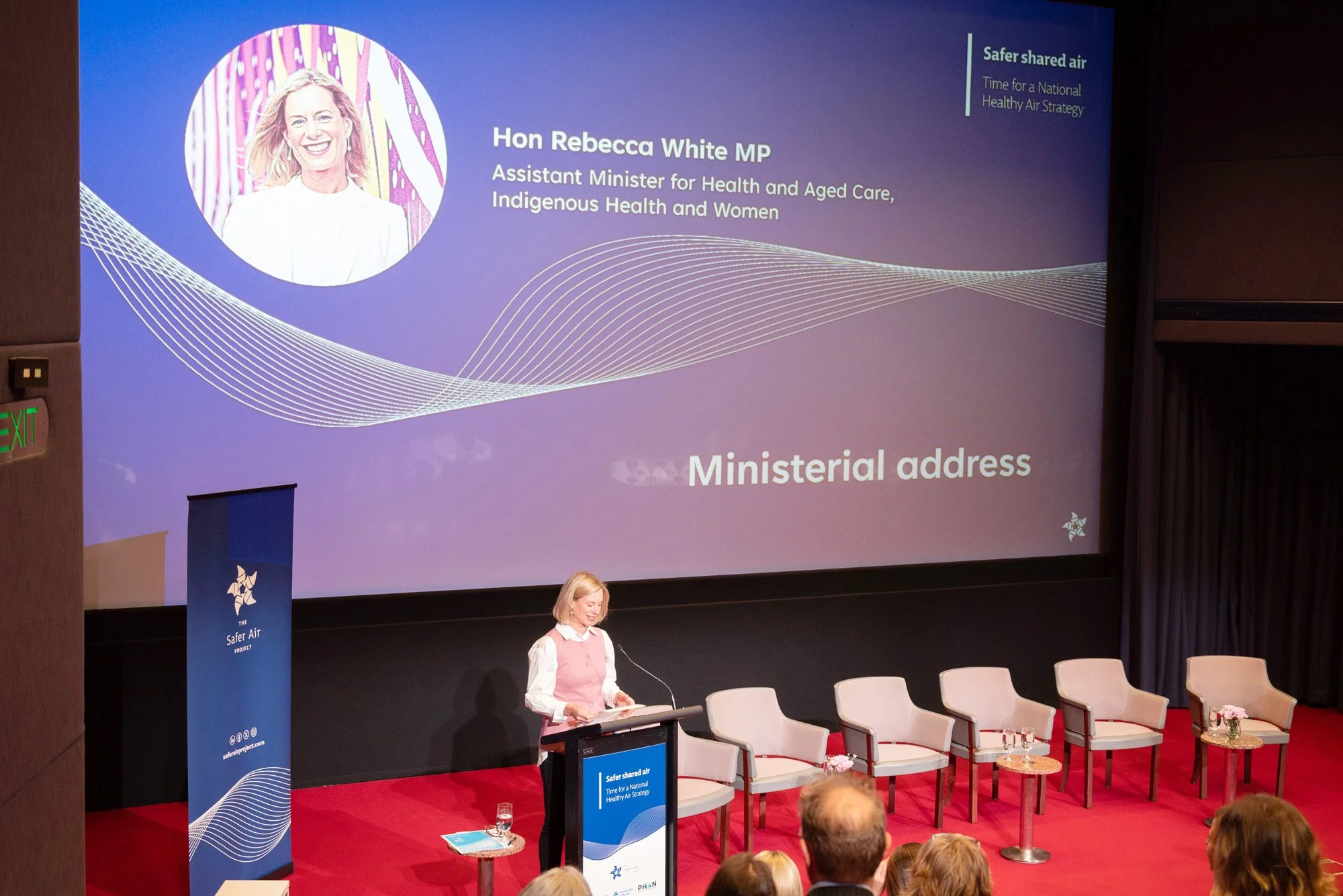
Dr Bronwyn King AO, co-founder of Air Club, emceed the first two sessions, while Plum Stone, founder of the Safer Air Project, moderated the final session. The day began with opening addresses from Parliamentary Friends of Clean Air Quality co-chair Dr Monique Ryan MP and the Hon Rebecca White MP, and an introduction from Plum Stone.
“Preventative healthcare more than pays for itself in every respect. And something like a National Healthy Air Strategy is just a brilliant investment in our future.”
Dr Monique Ryan MP
Parliamentary Friends of Clean Air Quality co-chair
“I want to thank everybody here for their efforts to raise awareness of the critical importance of indoor air quality. And assure you that the government is committed to working with you, with our CDC, to create safer, healthier spaces for everybody. … Because the fact that so many Australians live, work, play indoors means that we have a serious responsibility to ensure they can do that safely.”Hon Rebecca White MP
Assistant Minister for Health and Aged Care, Indigenous Health and Women
“How do we persuade our leaders that cleaner indoor air is one of the biggest opportunities that we have to improve health and wellbeing? … I believe addressing indoor air quality is one of Australia's most significant yet most overlooked public health opportunities. Get it right, and the benefits for health, education, productivity, pandemic preparedness, climate resilience, safe work, accessibility and equity are enormous.”Dr Bronwyn King AO
Air Club
“People living with chronic health conditions – we’re in every room. We're in every classroom. Our children are in every classroom. Every workplace. And while we all breathe the same air, it isn't always with the same consequences.”Plum Stone
Founder, The Safer Air Project
Professor Brendan Crabb AC from the Burnet Institute made the case for cleaner indoor air as both an everyday public health measure and protection against future pandemics. Ben Harris from Private Healthcare Australia explored the investment case for prevention, including the challenge of funding improvements whose benefits extend across the health system, workplaces, families and communities. Mark Brooke from Lung Foundation Australia drew on lessons from engineered stone and tobacco control, arguing for coordinated government action and clear responsibility for air quality.
The lived experience panel brought together Adjunct Professor Rebecca Haddock from Asthma Australia, Anne Wilson from Emerge Australia, Mark Brooke, Professor Crabb and Ben Harris.
For people living with chronic health conditions or disability, the air in a shared space can impact whether they can safely attend an appointment, go to work or take part in their community. These decisions can involve considerable planning and compromise, with consequences for families and carers too.
Adjunct Professor Rebecca Haddock described how poor air quality affects people with asthma, including disrupted sleep, missed work and school, financial pressure and difficulty finding relief from bushfire smoke, even indoors. For people with asthma, she said, “air quality can be the difference between a good day and a trip to hospital.”
Anne Wilson spoke about the consequences of reinfection for people living with ME/CFS and long COVID, including setbacks in health and further isolation. She described safer air as a public health and disability inclusion measure that can help prevent avoidable deterioration and protect people already living with chronic and complex conditions.
Improving indoor air quality is an opportunity to reduce these barriers. It also offers wider benefits, helping protect health in the places we all share.
What is Australia doing to improve indoor air quality?
The second session considered Australia’s current approach, with presentations from Dr Amanda Cohn MLC, Emma Oju from Safe Work Australia and Associate Professor Suman Majumdar from the Burnet Institute.
Coming shortly after the NSW parliamentary inquiry into clean indoor air handed down its report, the conference provided a timely opportunity to consider its findings and their relevance to national action.
The report recognises clean indoor air as an accessibility and equity issue for people with chronic health conditions and their families. It also identifies potential impacts on student learning, the transmission of airborne illnesses and school attendance.
Dr Cohn outlined the report’s 38 recommendations, including clearer ministerial responsibility, a state indoor air quality strategy, expert advice and monitoring in priority settings. She described the report as a tool for continued advocacy, rather than an endpoint.
“We actually need all of you to continue advocating for all of these things,” she said.
The NSW Government’s response to the report is due on 22 January 2027.
Emma Oju outlined Safe Work Australia’s model code of practice for managing biological hazards at work, including guidance on ventilation, air cleaning and protecting workers at greater risk. She also explained the process of developing model guidance and its adoption by states and territories.
Associate Professor Suman Majumdar shared interim findings from the Pathway to Clean Indoor Air project, which tested ventilation and filtration interventions across 190 rooms in schools and local government settings. He described practical lessons about installation, noise, building constraints and the workforce needed to support wider implementation.
Brett Fairweather from It’s Engineered and Daniel Sherrell from the ACTU joined the speakers for a Q&A panel, bringing further perspectives from engineering and the union movement.
Brett Fairweather brought both engineering expertise and lived experience to the discussion, sharing, with his daughter Ella’s permission, how her life had changed following COVID-19. He also explained why improving ventilation standards requires decisions from policymakers about the level of protection buildings should provide.
Dan Sherrell connected air quality with climate risks and the protection of workers, calling for clear, enforceable workplace standards supported by systematic monitoring and reporting. The discussion returned to the importance of community awareness, lived experience and political leadership in turning evidence into action.
From evidence to reform: delivering a National Healthy Air Strategy
The final session focused on how Australia can bring this work together through a National Healthy Air Strategy.
Professor Fay Johnston from the Centre for Safe Air outlined a framework bringing together the sources of air pollution, the places where people breathe and the people who need protection. She emphasised the importance of leadership, coordination, public understanding and a commitment to implementation.
Dr Bronwyn King AO from Air Club shared examples of international action on indoor air quality, highlighting opportunities for Australia to learn from approaches already being taken elsewhere. A recorded presentation from Distinguished Professor Lidia Morawska from THRIVE followed.
Professor Johnston and Dr King then joined Dr Cath Latham from the Heart Foundation, Alison Scotland from ASBEC and Magali Wardle from NABERS for a Q&A panel moderated by Plum Stone.
Dr Latham explained why environmental health risks cannot be left to individuals to manage alone. Alison Scotland highlighted the built environment sector’s experience of collaboration and the wider benefits of improving buildings. Magali Wardle discussed how measuring and publicly disclosing building performance can encourage improvement, and why good indoor air quality and energy efficiency can work together.
The discussion highlighted why clear responsibility is needed across portfolios and levels of government.
“One of the key challenges in every country is that this issue impacts all portfolios but is owned by none,” Dr King said.
Australia already has national arrangements to protect the safety of our food and water. The joint pre-budget submission calls for funding for a National Healthy Air Taskforce to develop the strategy, alongside a national public awareness and education campaign on air quality. A National Healthy Air Strategy would provide a coordinated approach to protecting the air we breathe, with clear responsibilities and a shared direction across portfolios and levels of government.
Continuing the call for healthier air
Plum Stone closed the conference by encouraging organisations to bring others into the call for a National Healthy Air Strategy, and reminding individuals that they could add their support too.
She also outlined how the Making the invisible visible campaign encourages organisations to monitor indoor air quality and publicly display the readings, helping people understand the air in the spaces they share.
“So while we’re waiting for government to take the lead, this is what we’re asking organisations to do, to visibly display and make the invisible visible,” she said.
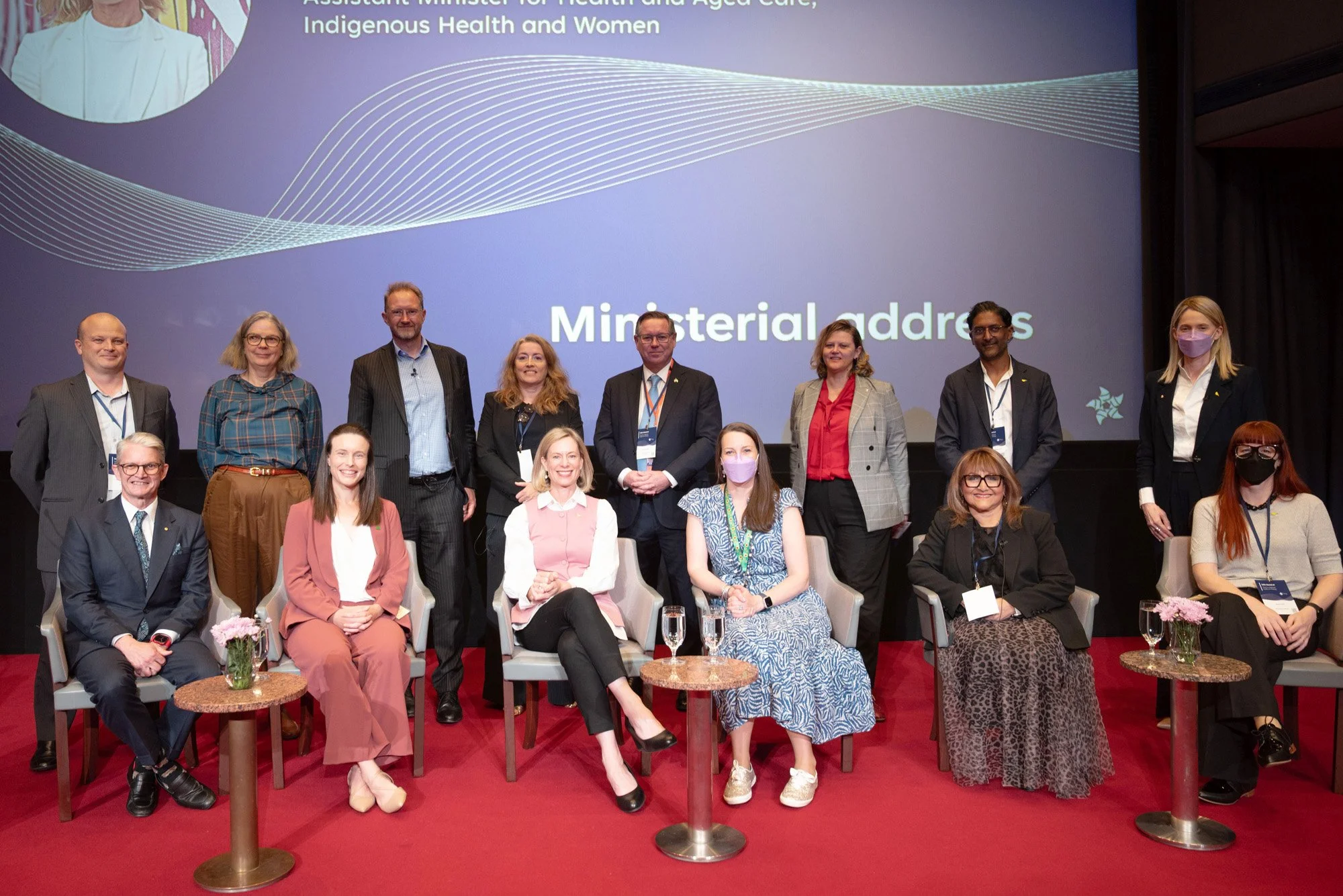
We thank all our speakers and panellists for sharing their expertise and perspectives, and everyone who joined us in Canberra and online. We also thank our partners and supporters for helping make the conference possible.
Both organisations and individuals can join the call for a National Healthy Air Strategy. Read the consensus statement and sign on to support it, and please share with your networks.